
 +91 9207070711
The Best Speech Therapy Activities for Children with Limited Speech
Category: Speech Therapy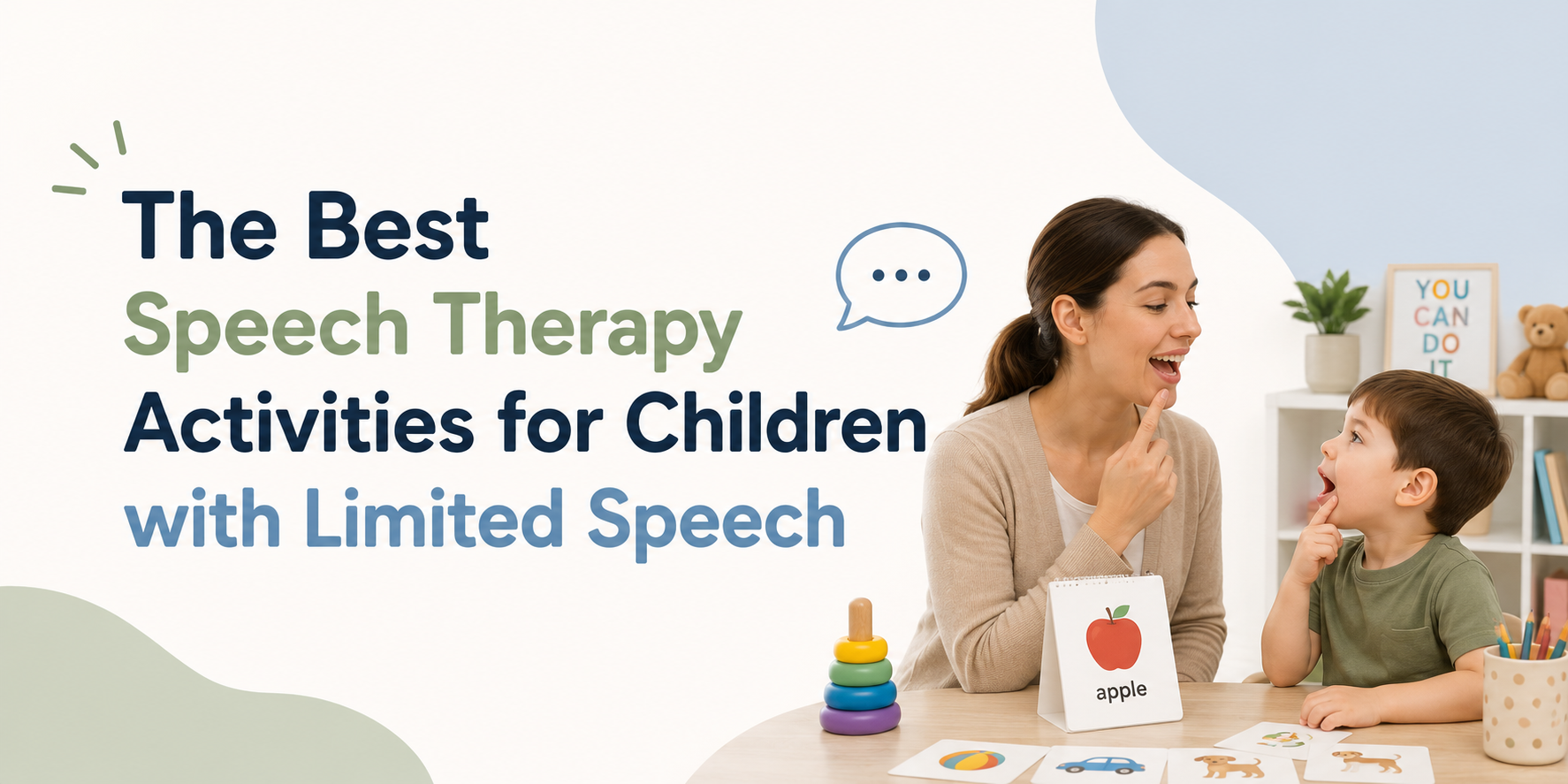
If your child says the right word but you still can’t quite make out what they’re saying, you’re not alone.
Unclear speech, often tied to a speech sound disorder or articulation trouble, is one of the most common worries parents bring to a speech therapist. The good news? With the right practice drills done consistently, most kids show real, noticeable gains in how clear their speech sounds over time.
At Lorem Wellness Care in Kochi, our speech language pathologists work right alongside families to build simple, effective home practice routines that complement the in-clinic therapy. So, here are some of the best speech therapy exercise options you can start using with your child today.
Mirror Practice
Sit with your child in front of the mirror, and practice the target sounds together. Like, watch how the lips, tongue, and jaw move because seeing it helps kids get it, not just hear it. It’s kind of visual feedback in a way, and that’s huge for the tricky ones, like “s,” “r,” “l,” and “th,” where it can feel a bit slippery.
How to do it: choose one sound your child struggles with most. Then exaggerate your mouth movements while you say it, and after that have your child copy you right there in the mirror.
Oral Motor Exercise
Because speech really depends on working together, the lips, the tongue and the jaw, so strengthening those muscles can help articulation in a straight way. In most cases, simple fun activities work the best.
You can try these,
- Blowing bubbles or blowing through a straw
- Cotton ball races, where you blow the cotton ball across the table
- Wide smile transitions, then going to a pout, like switching moods
- Licking a lollipop or peanut butter off the lips with SLP guidance
Sound Repetition with Picture Cards
Using flashcards with objects that begin with the target sound, makes practice feel more lively and a bit more organized. Like say, if your child is working on the “b” sound, use cards such as “ball” “banana” or maybe “bear” and if you want, you can pick ones that your child already likes.
How to do it: show the card, say the word clearly, then have your child repeat it. After that, turn the whole thing into a game. Hide a few cards around the house, do a scavenger hunt, and celebrate every find like it’s a small victory.
Tongue Twisters and Rhymes
Once your child can say a target sound in stand alone words, these tongue twisters and rhymes help them practice that sound in a smoother connected way. Try to keep it light and fun, because it isn’t about speed, it’s more about clarity, getting it right as they go.
Tip for younger children: Instead of using full tongue twisters all at once, try short little phrases like “big blue ball” or “silly snake” and then build from there.
Storytelling and Sequencing
Have your child describe a pretty simple picture story, in order, using words like “first,” “next,” and “finally”. This helps with more than articulation though it also builds sentence structure and confidence for longer speaking parts, and that’s usually where limited speech starts to show up.
Everyday Conversation Practice
Honestly some of the most effective practice doesn’t even feel like practice. It’s more like you’re just going about your day, yet you’re weaving in the target sounds, under the surface. You can name foods at breakfast, or narrate what you’re doing while cooking together.
Why it works: Those short, natural sessions (10–15 minutes) that get stitched into daily life usually beat long, forced drills, and they help your child stay motivated instead of getting frustrated, which makes everything easier to keep going.
Singing and Rhythm Games
Music makes everything more natural, because music tends to slow speech down a bit, and it highlights each little sound, like you can actually hear it. That’s why it can be such a useful tool for articulation practice, even if nobody says “practice” out loud. Nursery rhymes, and repetitive songs too, give kids a steady loop to follow, so they can repeat sounds and words without feeling pressured or judged. Sometimes it feels like the melody guides them, and they just keep going.
A Few Tips for Practice at Home
- Sessions should not be longer than 10-15 minutes.
- Prior to gently addressing errors, always commend successful attempts.
- Practice only the sounds your child’s speech therapist is currently targeting.
- If your youngster appears irritated, stop; a brief, joyful session is preferable to a lengthy, emotional one.
- Communicate with your speech therapist and let them know how things are doing at home.
When to See a Speech Therapist?
Home exercises usually help most when they’re paired with real professional guidance. If your child’s speech stays hard to get, like family members can’t easily understand them, they start to duck out of talking because no one is reading it right. Also if the speech is still unclear past the age it’s typically expected to settle, then it’s a good time to speak with a qualified speech-language pathologist.
At Lorem Wellness Care’s speech therapy center in Kochi, our team puts together customized therapy plans and shows parents plainly how to support the gains at home, so things keep moving forward way past the therapy room.
Frequently Asked Questions
1. At what age should unclear speech in children be evaluated?
By the time they are 5-6 years old, most kids have perfected their speaking sounds. A speech-language examination is advised if your child’s speech is still difficult to comprehend after this age or if you are concerned earlier.
2. Is it possible to perform speech therapy activities at home?
Yes, however they are most effective when used in conjunction with professional therapy as reinforcement. After determining your child’s target sounds, a speech-language pathologist should advise you on the activities to perform at home.
3. How often should we perform speech exercises at home?
Short daily sessions of 10–15 minutes are more helpful than longer, infrequent ones. Consistency matters more than duration.
4. How long does it take to observe improvement in voice clarity?
This varies for each child and the severity of the challenge, but many families notice modest improvement after a few months of consistent therapy and home practice.