
 +91 9207070711
Child Having Sudden Aggression? Understanding the Signs and Advantages of Occupational and Behavioral Therapy
Category: Behavior Therapy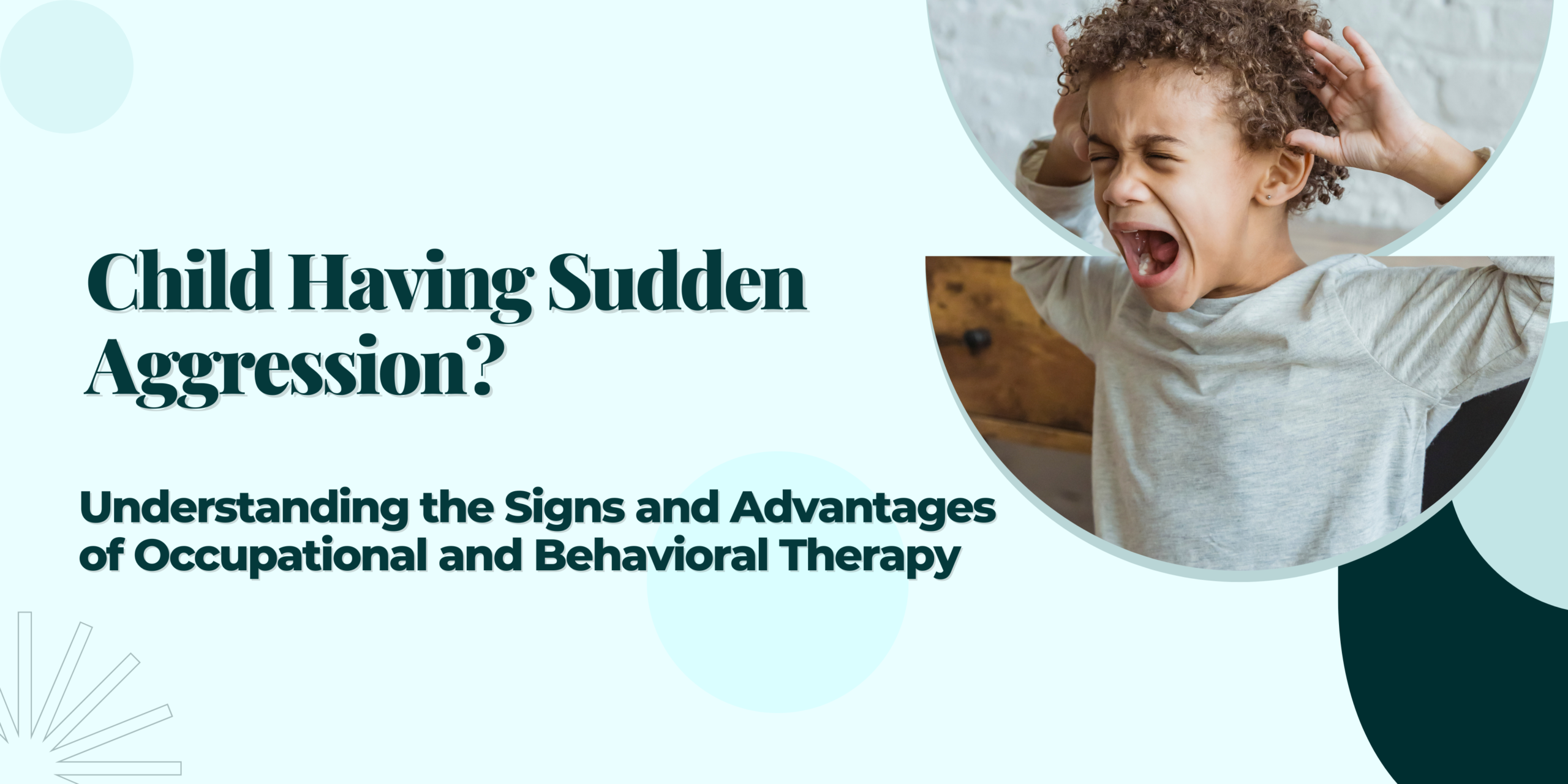
The sudden aggression caused by your child suddenly showcased hitting, shouting, throwing or tantrums?
When this happens, for you as a parent, it can feel confusing, and exhausting. Still, most times, that aggression is really your child trying to communicate, even if it comes out the wrong way.
Identifying A Child’s Sudden Aggression
Aggression in children doesn’t always mean that the child is “bad”, disobedient, or just intentionally difficult. A lot of the time, that kind of behavior is more like a way of communicating, or trying to show feelings they cannot really explain with words yet.
Children, especially the younger ones, are still learning how to handle emotions such as frustration, fear, disappointment, sadness or being overwhelmed. If they can’t put those feelings into language, they might spill it out in physical ways, or in emotional ways, without meaning to.
Aggressive behavior can look a little different from one child to the next, but it often shows up quickly and can feel so out of character compared to their usual self. So it matters to remember that aggression is usually a sign of something underneath, like an underlying challenge, not the actual problem by itself.
What Are The Common Signs?
Every child has emotional ups and downs from time to time. But if the repeated aggressive behavior keeps showing up, it could mean your child might need extra help, or a bit more support than usual.
There are a few signs parents should actually be paying attention to, even if it seems “normal” at first:
- Lots of frequent temper tantrums or sudden angry outbursts
- Hitting, kicking, biting, or pushing other people
- Throwing objects when they get frustrated
- Yelling, screaming, or shouting on a regular basis
- Trouble getting calm again once they are already upset
- Very intense reactions to small letdowns or tiny disappointments
- Random irritability, or noticeable mood shifts that feel out of nowhere
- Struggling to interact peacefully with siblings, or with classmates
If these behaviors are happening often, or they start affecting school performance, friendships, or home life, it may be a good idea to look into professional guidance, sooner rather than later.
What Are The Causes of Aggression In Children?
According to the Child Mind Institute, aggression in children can happen for a bunch of different reasons, not only because of “bad behavior”. And honestly, figuring out what’s underneath matters a lot if you want real help. Things like mood disorders, for example depression or bipolar disorder, can make a child seem more snappy, impulsive, or openly aggressive. Other kids may lash out because they’re frustrated, can’t communicate well, or they have developmental conditions such as autism, particularly when they have trouble putting feelings into words.
Also, impulsivity connected with ADHD, or similar conditions, can show up like aggression, since a child might do stuff first, then think later about consequences. In other situations, trauma, ongoing stress, medical issues, or even tougher behavioral disorders can set off aggressive responses, so a professional evaluation becomes really important when it keeps happening too often.
1. Big Emotions they don’t know how to express right?
Kids don’t always have the words, so they can’t really explain what’s going on inside. Emotions like frustration, jealousy, sadness, anxiety, or even disappointment can show up as aggressive behavior, even if they don’t mean to be “bad” about it. Say, a child feels ignored or misunderstood. They may start shouting or hitting, simply because they don’t know any other way to communicate, and then the emotion just spills out.
2.Changes at home or school
Children are sensitive to what happens in their routine and their environment. Big shifts in life, even if they seem “normal” on paper, can bring emotional stress and that sort of pressure.
You can see it in common situations like:
- Starting a new school
- Changes in teachers or classmates
- Family conflicts
- Moving to a new home, or apartment
- A new sibling in the family
- Separation or divorce
- Loss of someone the child cared about
Also, the smaller changes that adults might shrug off as minor can feel, to children, actually huge and hard to manage.
3. Stress or Anxiety
Sometimes aggression is a response to stress. A child might feel pressure at school, fear social situations, have trouble academically, or feel emotionally overloaded, you know, kind of too much all at once.
Instead of saying “I’m stressed,” children often say it another way, like anger, or with sudden emotional outbursts that show up like, right then.
4. Sensory Difficulties
Some children can turn aggressive when they feel overstimulated, like everything is too much at once. Loud noises, crowded places, bright lights, certain textures or even sudden, unexpected changes in routine can set off a strong emotional reaction.
That shows up a lot with kids who have sensory sensitivities, because their nervous system may process those signals in a tougher way.
In situations like this, occupational therapy can be really beneficial, because an occupational therapist helps children better process the sensory input and it also supports emotional regulation a lot. They teach coping strategies for moments that feel too much. With structured sensory activities plus calming techniques, kids often learn a healthier way to respond when they’re getting overstimulated, rather than shutting down or getting more frustrated.
5. Behavioral or Developmental Disorders
In some cases, aggression might be sort of linked to the hidden developmental, behavioral obstacles that are going on underneath, as some kids have a hard time in other areas. These could include Attention Deficit Hyperactivity Disorder (ADHD), Autism Spectrum Disorder, anxiety based difficulties, and trouble with emotional regulation.
Kids who deal with any of that, may find it harder to manage impulses, handle their emotions, or communicate clearly, even when they really want to.
When Do Parents Need to Worry?
Occasional tantrums are normal, especially when children are still young. Still, it might be time to look for extra support if things start stacking up, aggressive behavior happens a lot, and not just every now and then. Also if your child ends up hurting themselves or someone else, that’s a big sign. When the emotional outbursts feel super intense or honestly hard to steer, it can be worth getting help sooner rather than later.
If teachers mention behavioral concerns at school, that matters as well, because it often shows up outside the home. If friendships are getting strained or family relationships are taking a hit, that’s another moment to pay attention. And if the whole pattern keeps going for weeks or even months without any real improvement, then early support can really help.
Getting assistance early can make a meaningful difference, and it may help stop things from getting more complicated as time passes.
The Benefits of Behavior Therapy
Behavior therapy and occupational therapy can work together, so that kids can start to understand emotions better , handle frustration more smoothly, and build healthier coping skills overall.
With behavior therapy, children often get help to:
- Recognize what they feel and the triggers behind it
- Learn emotional regulation strategies, like quiet
- breathing or step by step calming
- Improve how they communicate needs and feelings
- Form more healthy behavioral responses instead of the quick reactive ones
- Grow stronger in social interactions with peers and adults
Then occupational therapy steps in too, to support the child by:
- Helping with sensory regulation, since sounds textures and lights can feel like too much
- Teaching calming routines and self-soothing techniques
- Building attention span and impulse control, bit by bit
- Supporting daily routines that run smoother, plus transitions that feel less stressful
- Making it easier for children to feel settled in overwhelming environments
Together, these therapies create a more complete plan, so children can manage aggression in everyday life and also build confidence, in a practical way that actually fits their day.
What Takes Place in Therapy?
Behavior therapy usually zeroes in on a few things, like identifying the triggers, not just broadly but in day to day moments. It also teaches emotional regulation, in a more practical way, and helps build communication skills, so there’s less friction. Often you’ll see positive reinforcement used, plus structured routines that keep everything steady and predictable.
In occupational therapy sessions, children take part in sensory adjustment tasks, movement oriented practice, and emotional self management approaches, plus self calming techniques. They may also do play centered learning activities, along with things like transition support and routine building exercises. When it all comes together, these options can help kids handle frustration in a more steady way and feel a bit more in charge, especially when things turn stressful.
Advantages of Behavioral Therapy
With time and steady support, behavior therapy can help children in different ways.
- Boost emotional self control
- Lessen sudden, aggressive outbursts
- Strengthen communication skills
- Build healthier coping approaches
- Enhance friendships and everyday social engagement
- Feel more assured and emotionally safe
Just as importantly, parents also get coaching on how to react calmly, and in a consistent manner at home. That guidance helps shape a supportive setting where the child feels heard and protected.
Advantages of Occupational Therapy
In occupational therapy sessions, children might take part in a mix of things like:
- Sensory regulation activities
- Movement-based exercises
- Emotional regulation strategies
- Self-soothing techniques
Sometimes it is more like a play based on learning activity, not just “therapy” in the normal sense, and other times there are transition and routine building exercises.
All of that, together, can help children better handle frustration and they often end up feeling more in control when stressful situations show up.
Helping Your Child at Home
Even if professional support can help, parents still hold a big part in the emotional development, day to day, in a quieter way.
A few simple moves you can try are like this:
Little but steady actions usually help build trust, and that emotional safety too, over time.
Conclusion
Seeing your child act suddenly aggressive can feel really worrying, but it is good to keep in mind that aggression is often more like a signal, not the entire story. A lot of the time children are trying to say something about what they feel but they do not yet fully get it, or they can’t name it.
By noticing the signs early, and giving the right support, parents can help their children build healthier emotional habits and better coping skills, step by step. Behavior therapy can be a really helpful move, when it comes to helping children handle emotions, strengthen behavior, and grow with more confidence in day to day life. At the same time, occupational therapy could help children who are having a hard time with sensory regulation, emotional overload, or other developmental hurdles, that in turn can fuel aggression.
For families looking at child-first therapy support, Lorem Wellness Care offers personalized behavior therapy support, designed to help children manage their emotions, improve day to day behavior, and build confidence through expert care. Our team tends to focus on understanding each child’s unique needs, and then they make supportive treatment plans that aim for lasting progress.
FAQ Session
1. Is aggression in children normal?
Yes, but it depends. Some frustration, tantrums, or angry reactions can be a normal part of child development, especially when they’re still younger and figuring out their feelings. Still, when there’s frequent hitting, yelling, biting, or intense anger that actually disturbs everyday routines, school or home then it might be time to get extra support.
2. What are the warning signs of potentially concerning aggressive behavior?
Parents should keep an eye out for behaviors like frequent outbursts, hitting, biting, kicking, throwing objects, huge frustration about small stuff, trouble settling down, and aggression that ends up affecting school, friendships, or the family relationship.
3. How does behavior therapy help aggressive children?
Behavior therapy helps kids sort through what they’re feeling, so they can improve emotional regulation, and find healthier ways to answer when frustration or anger shows up. In practice, a therapist might lean on positive reinforcement, keep things fairly structured with simple strategies, and offer emotional coaching for the tougher behaviors and for calmer habit patterns. It can feel different from child to child, but the goal stays the same.
4. How long does it take for behavior therapy to start working?
Every child is different, some kids might show improvement within a few weeks, but others need longer term support. At home consistency matters, plus parental involvement, and then the child’s own, individual needs take a part in how things progress as well.
5. Can occupational therapy help with aggressive behavior?
Yeah, occupational therapy can help with aggressive behavior, but depends on why it’s happening in the first place. A lot of the time, aggression is tied to sensory sensitivities, struggles with emotional regulation, ADHD, autism, or other developmental differences. In those cases, an occupational therapist works on coping strategies, builds regulation skills, and helps a child handle overwhelming moments more calmly, instead of reacting in the same automatic way every time.
6. How can Lorem Wellness Care support my child?
Lorem Wellness Care gives personalized behavior therapy to support and is tailored to every child’s emotional needs and developmental needs. The aim is to help kids get better at emotional regulation, build stronger communication, and grow confidence, while also shaping daily routines that feel more healthier. With expert care, the whole process is meant to support how each child is doing and not just one thing.